Return to office is the flavour of the year in the labour market, and office space is in demand. For good or bad, however, there is no turning back the clock to pre-COVID years, and what once worked in terms of space needs is unlikely to be what works now or will work in the future. With that in mind, organizations that are bringing people back to in-person work should do so thoughtfully, perhaps with an eye to continuously re-thinking their design and space requirements to meet the needs of a shifting economy and workforce.
According to a survey of Royal LePage® commercial real estate market professionals across the country in the 2026 Royal LePage Commercial Real Estate Report, 66% of experts expect occupier demand for office space to modestly increase or remain stable in their respective market in 2026. Five per cent expect demand will increase significantly. Meanwhile, 42% of experts expect vacancy rates for office space to decrease in their market this year.
The lasting impact of the work-from-home shift
Working from home was imposed suddenly by many companies six years ago, which inevitably made its implementation less-than-smooth. As the pandemic lockdowns took hold, organizations were shoved into a new and often undesired reality. Workforces that had been grouped together in a single office were scattered across numerous locations as employees got their work done from home and managers coordinated it as best they could using hastily-learned technology solutions. It was a brutal transition for many, done without the luxury of advanced planning.
The forced work-from-home experiment has been followed by many different models of hybrid work arrangements, but interestingly there is still a wide variety of opinions as to what the best work model is for all concerned. Many workers adore being able to work from home, while others say it makes them feel lonely or isolated. Some C-suite executives are suspicious of hybrid work, and are comfortable saying publicly that they believe those not working supervised in a communal space are likely slacking off. Other leaders do not feel that way, but believe passionately that teams work better when they can see each other in person. There are environmental considerations around commuting, issues around how we want to develop our downtown cores, and questions about what it all might mean for real estate development.
Designing offices for collaboration and connection
As the shift back to in-person work happens, this is the time to be thoughtful about what we want office spaces to look like, and to acknowledge that that might change over time. During the pandemic there was talk about the eventual need for a Starbucks or airport lounge-type of arrangement, where co-workers got together to exchange ideas in a casual manner, coming and going as they pleased without formal assigned work stations. In practice, this has not always been an easy arrangement, given that workers sometimes have come into the office on different days of the week, meaning that the café was frequently empty.
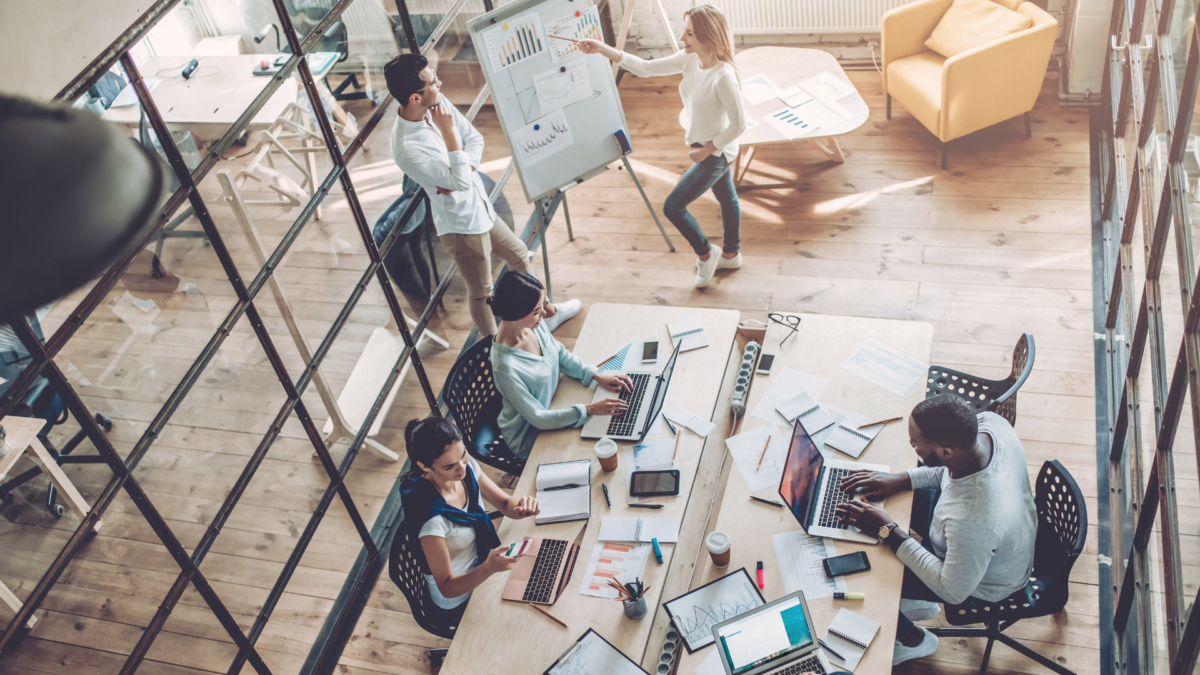
Figuring out how many meeting rooms are needed and what they should be used for is another work-in-progress for many. Is the goal to look at a screen together? Do we need small spaces for intimate conversations, or do we need larger ones for brainstorming sessions? What should be the ratio of meeting rooms to individual workspaces? Even without having everyone in the office on the same day, the reality for some organizations is that it makes sense to have more collaborative spaces, which in practice means more square feet, not fewer.
Navigating the shift in workspace models
Creating an atmosphere that makes workers happy, or at least not unhappy, to return to in-person work is important, which means making good choices about space use. The hot desking versus hotelling versus assigned spaces debate is a case in point. For years, the norm was to give people their own assigned spaces where they could put their favourite coffee mug in a drawer and tack up pictures of their kids above their workstation. With hybrid working, in theory, it makes less sense to practice this as there is no point reserving a space for someone who might not be in for days at a time. And so, the first-come, first-serve model of hot desking was introduced, as well as the variation of hotelling, where workers have to sign up for a desk in advance. It sounds perfectly reasonable, except that if not well managed, both systems can lead to stress and unhappiness, which inevitably impacts work performance.
For the longer term, there are generational issues that might impact the need for office space as well. One reason that people come into the office is that it is a comfortable, efficient place to get work done. Someone with a large house and home office space might see no need to come into a physical office, while those stuck in a small condo might prefer it. As Boomers and Gen Xers retire, Gen Z and Alpha will make up an increasing share of the workforce, and their housing choices will influence their feelings about in-person work. As well, there will increasingly be issues around climate to consider when designing offices and as well when it comes to deciding on what amount of commuting makes sense given the environmental considerations.
Building offices for the future
At the end of the day, all organizations want to assemble the best teams and maximize their productivity. Giving those workers the best spaces possible is part of doing those things, and that means making thoughtful decisions around offices. Today’s decisions might not be the best ones for tomorrow, and the successful organizations will be the ones that acknowledge that and are willing to continuously think what is best in terms of office spaces.
Want to know more about office trends in Canada? Read the Royal LePage 2026 Commercial Real Estate Report for more insights.