
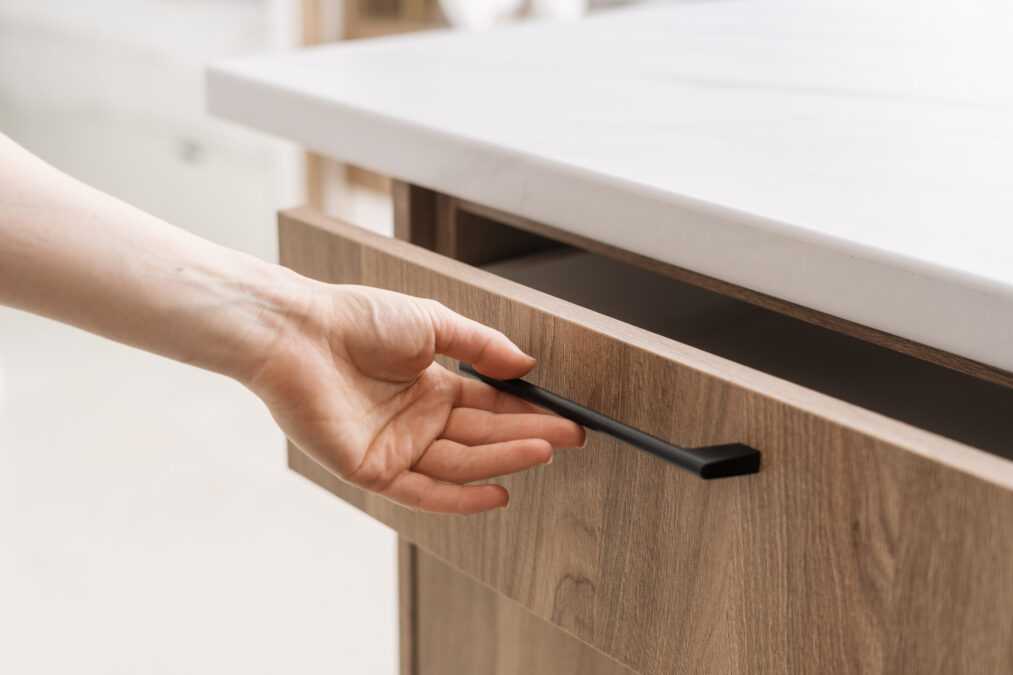
If you’re looking to modernize dated cabinetry in the kitchen or add your own sense of style to a new-build bathroom, cabinet hardware is a simple and cost-effective update to make your space feel more considered. With so many finishes and styles available, it is helpful to have a plan before you start shopping.
Here are five things to consider when choosing cabinet hardware:
1. Knobs versus pulls
The traditional rule is straightforward: knobs for doors and pulls for drawers. Knobs require less grip and work well on upper cabinets where you are reaching up to open a swinging door. Pulls offer more leverage, making them ideal for heavier lower drawers. For a timeless look, many Canadian homeowners mix both, using knobs on all doors and pulls on all drawers while keeping the finish consistent.
Alternatively, many modern and transitional designs use pulls exclusively for a sleek, uniform aesthetic. Don’t be afraid to break the rules if it suits the layout of your room.
2. Getting the size right
Proportion is key to a polished look. A good starting point for pull length is approximately one-third the width of the drawer front. While two smaller pulls on a wide drawer offer a traditional look, a single, extra-long pull is often more functional for modern drawer glides. For cabinet doors, knobs typically fall between one and one-and-a-half inches in diameter – anything smaller can feel difficult to grasp.
Adopt the “Centre-to-Centre” Rule: If you are replacing existing hardware, measure the distance between the screw holes from centre to centre. In Canada, you will often see these sizes listed in inches, but pay close attention to the millimetres measurement. Most modern cabinetry follows a metric system where 96mm (approx. 3-3/4″), 128mm (approx. 5″), and 160mm (approx. 6-1/4″) are the standards. Matching the metric number is the secret to ensuring your new hardware aligns perfectly with existing holes.
3. Choosing a finish
Some of the most common finishes are brushed nickel, matte black, brass, and bronze. The most important rule is to coordinate with the permanent fixtures you cannot easily change, such as faucets, light fixtures, and hinges.
If you have stainless steel appliances and are feeling stuck, matte black is a versatile choice that complements almost any palette. For those seeking warmth, unlacquered brass has seen a significant resurgence, as it develops a natural patina over time that adds character to both traditional and transitional spaces.
4. Material and longevity
What the hardware is made out of matters as much as the aesthetic. Most budget-friendly hardware is die-cast zinc, which is lightweight and affordable, but more prone to wear over time. Solid brass, while a larger upfront investment, is considerably more durable and holds its finish longer in high-traffic areas like the kitchen. When shopping, check if a product is solid brass or brass-plated. The difference won’t be visible when new, but it will become apparent after years of use.
5. Match the style to the space
Hardware should feel like a natural extension of the room. Traditional cabinetry pairs well with more ornate knobs or classic cup pulls, while flat-panel cabinets suit simple bar pulls with clean lines.
If you are not sure where to start, bring a cabinet door sample or a photo of your room to the hardware store. It is the best way to see how different finishes interact with your cabinet colour. If possible, take a single sample home first; what looks right under bright showroom lights can read differently under the specific lighting of your own home.
Your choice of hardware is a small detail that makes a significant impact on how you experience your home every day. By choosing pieces that reflect your style and meet your functional needs, you are adding a personal, finished touch to the heart of your home.