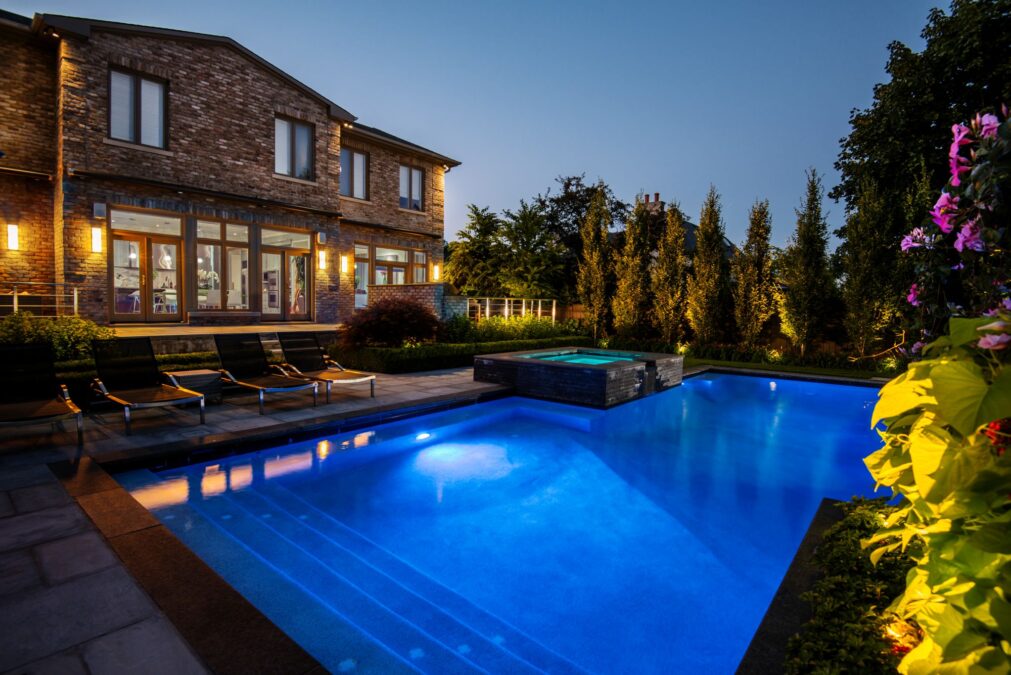
There’s something magical about a pool at night. The right lighting transforms an ordinary backyard into an inviting retreat and extends the hours you get to enjoy it. But pool lighting isn’t only about ambiance. Done well, it also improves safety, helps you navigate the space after dark, and adds real visual appeal to your property.
Here’s how to think about lighting your pool and backyard for a safer, more enjoyable summer.
Why pool lighting matters
As the days get longer and summer temperatures peak, evening swims become one of the best parts of owning a pool. But a poorly lit pool area creates genuine hazards: it’s harder to see the edges of the pool, steps and ladders become difficult to navigate, and guests – especially children – can misjudge depth or distance in low light.
Good pool lighting addresses all of this without sacrificing the atmosphere that makes nighttime swims so enjoyable. The goal is a space that feels warm and welcoming while giving everyone enough visibility to move around safely.
In-pool lighting options
Lighting inside the pool itself is where most homeowners start, and for good reason. Underwater lights not only illuminate the water for swimmers, they create that signature glowing effect that makes a pool look stunning from across the yard.
LED pool lights
LED lights have become the standard for in-pool lighting, and it’s easy to see why. They use significantly less energy than older incandescent options, last much longer, and many models offer colour-changing capabilities that let you shift the mood of your pool with a simple remote or app. A pool glowing in soft white is calm and elegant; a pool cycling through colour can set the tone for a party.
If your pool was built with older lighting, retrofitting to LED is a relatively straightforward upgrade that most pool professionals can handle in a single visit.
Fibre optic lighting
Fibre optic systems are a popular choice for pools where you want to minimize the electrical components in the water itself. The light source sits outside the pool and sends light through flexible cables to fixtures inside the water, making it a particularly safe option for pools used heavily by children. Fibre optic lights tend to be more diffuse and atmospheric than LED, producing a softer, star-like effect.
Flush-mounted niche lights
For a clean, integrated look, flush-mounted niche lights sit recessed into the pool wall. They provide solid illumination for swimmers and are unobtrusive during the day. Most modern pool builds include these as standard, and they pair well with LED technology for efficiency and longevity.
Perimeter and deck lighting
Lighting around the pool is just as important as lighting inside it. The pool deck, steps, and surrounding pathways should all be well lit so guests can move safely after dark.
Step and coping lights
Recessed step lights – small fixtures installed directly into pool steps or the coping around the pool edge – are one of the most practical safety investments you can make. They make the transition between the deck and the water immediately visible, reducing the risk of a misstep. They’re subtle enough that they don’t distract from the overall look of the space, but bright enough to do their job effectively.
Path and landscape lighting
Low-profile path lights along the route from your home to the pool help guests navigate the yard without floodlighting the entire space. Solar-powered options have become increasingly reliable and are a low-maintenance choice for Canadian backyards – just make sure they get enough sun during the day to perform well after dark.
Landscape lighting around trees, garden beds, or fences bordering the pool area adds depth and visual interest, turning the pool into a focal point of a thoughtfully lit outdoor space rather than a single glowing rectangle in an otherwise dark yard.
String lights and overhead lighting
String lights strung above the pool or along a pergola or fence create a warm, festive atmosphere that’s hard to replicate with any other type of fixture. They work particularly well for entertaining; they’re bright enough to be functional without feeling harsh, and they add a sense of occasion to an evening swim or a backyard gathering.
For overhead lighting in a covered structure like a gazebo or cabana, weatherproof pendant or ceiling lights rated for outdoor use provide more directed light for dining or lounging areas adjacent to the pool.
Smart lighting and controls
Modern pool lighting systems can be controlled remotely through a smartphone app or integrated into a broader smart home setup. This means you can turn lights on before you head outside, adjust brightness or colour without getting up, and set schedules so the pool is lit for you every evening without any effort.
If you’re investing in new pool lighting, it’s worth asking your installer about smart-compatible options from the start; it’s much easier to integrate controls during installation than to retrofit them later.
Safety tips for pool lighting
Lighting improves pool safety significantly, but a few principles are worth keeping in mind:
- Use fixtures rated for aquatic or wet environments. Never install a standard indoor fixture near or in a pool. All underwater and poolside lighting must meet the safety standards for wet or submerged applications.
- Have electrical work done by a licensed professional. Pool lighting involves water and electricity, a combination that demands professional installation and periodic inspection. Don’t cut corners here.
- Light the entire pool perimeter, not just part of it. A pool that’s well lit on one side and dark on the other creates blind spots that undermine the whole point of having lighting in the first place.
- Consider motion-sensor lighting for the pool gate and entry path. A motion-activated light near the pool gate adds an extra layer of visibility and can also deter unauthorized access after dark.
Solar vs. hardwired lighting: which is right for you?
Solar lighting has improved dramatically in recent years and is a practical, low-cost option for path lights, landscape accents, and string lights. The main limitation is performance on overcast days, which can be a real factor in Canadian summers. For critical safety lighting – steps, coping, and in-pool fixtures – hardwired lighting is more reliable and consistent.
A combination of both tends to work well: hardwired lighting for safety-critical areas and solar for decorative accents and ambiance.
Getting the most out of your pool lighting
The best pool lighting setups layer different types of light to create a space that’s both functional and beautiful. Think of it in three tiers: light inside the pool for visibility and atmosphere, light at the pool’s edge for safety, and light in the surrounding landscape for depth and ambiance.
If you’re planning a new pool or a significant upgrade, it’s worth working with a pool designer or landscape lighting professional to map out a cohesive plan before installation begins. Retrofitting lighting after the fact is always more complicated and more expensive than getting it right the first time.
Frequently Asked Questions
What is the best lighting for a pool at night? LED in-pool lights are the most popular choice for their energy efficiency, longevity, and colour options. Pair them with step lights and perimeter lighting for a safe and visually appealing setup.
Is pool lighting safe? Yes, when properly installed by a licensed professional using fixtures rated for aquatic or wet environments. Never use standard indoor fixtures near or in a pool.
Can I add lighting to an existing pool? In most cases, yes. LED retrofits are common and relatively straightforward for pools with existing light niches. Adding new fixtures may require more involved work – consult a pool professional to assess your options.
Do solar pool lights work well in Canada? Solar lights have improved significantly and work well for decorative and accent lighting. For safety-critical areas like steps and pool edges, hardwired lighting is more reliable given Canada’s variable cloud cover.
How much does pool lighting cost? Costs vary widely depending on the type of lighting, the size of the pool, and whether installation is straightforward or requires electrical upgrades. LED retrofits tend to be the most cost-effective starting point for homeowners looking to upgrade existing lighting.