
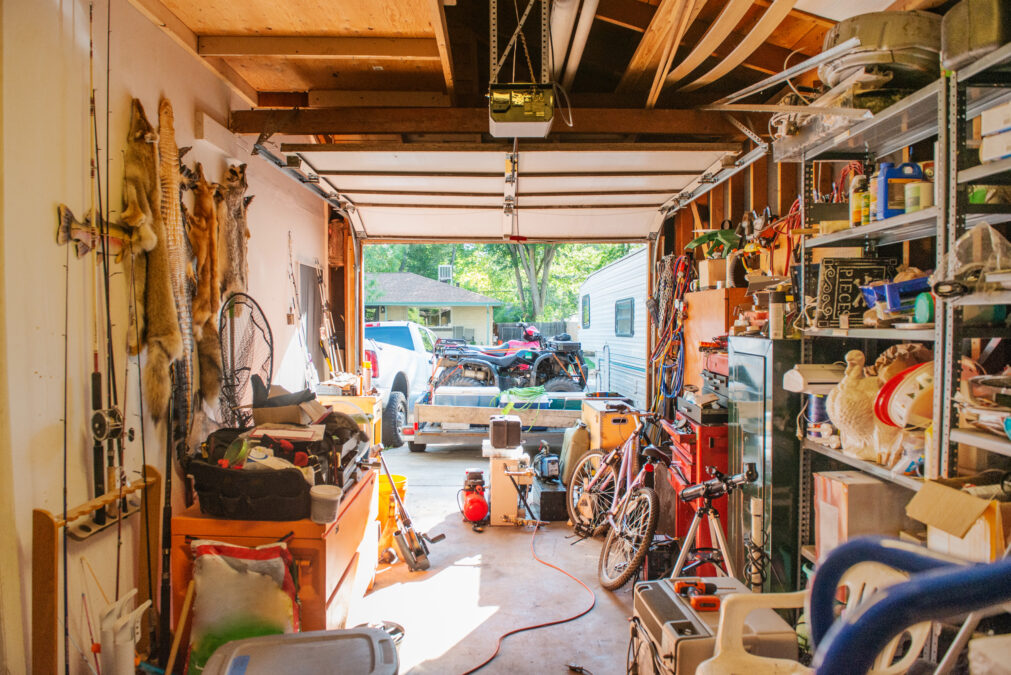
The best way to get the most out of your garage is to fully clear it out, deep clean it, organize storage vertically along the walls, and commit to parking your car inside every night. Done right, a well-organized garage protects your vehicle from Canada’s harsh winters, reduces clutter, and saves you time every single morning from November through March.
Step 1: Do a Full Garage Cleanout (Budget a Full Weekend)
A garage cleanout takes a full weekend — not one afternoon. Pull everything out of the garage completely, then sort every item into four piles:
- Keep – items you use regularly and have a specific place for
- Donate – usable items you no longer need
- Sell – sellable items for Facebook Marketplace or a garage sale
- Trash – broken, expired, or unsalvageable items
Be honest: if something hasn’t been touched in a year or two and you can’t name a specific upcoming use for it, it’s time to let it go.
Step 2: Deep Clean the Empty Garage
With everything out, clean the garage thoroughly before anything goes back in:
- Sweep and scrub the floor. Use a concrete degreaser on oil or grease stains.
- Wipe down walls and doors.
- Inspect weatherstripping around doors and windows — gaps let in cold air and moisture over winter.
- Check the garage door mechanism and test that it opens and closes properly.
- Replace dead bulbs. Consider upgrading to LED fixtures for better visibility year-round.
Starting fresh with a truly clean space makes organizing far easier.
Step 3: Measure Your Space Before Buying Storage
Before buying any shelving, cabinets, or storage systems, measure your garage carefully:
- Map out the floor space your vehicle needs — length, width, and enough clearance on each side to open the doors comfortably.
- Treat the remaining wall space and ceiling as your storage area.
- Sketch a rough layout before purchasing anything.
Skipping this step is how you end up with shelving units that block a door or eat into your parking space.
Step 4: Build Upward — Use Vertical Storage
The goal is to keep the garage floor clear for your vehicle. The most effective way to do this is to go vertical:
- Floor-to-ceiling shelving or wall-mounted cabinets along the perimeter maximize space without reducing parking room.
- Clear, lidded bins labelled by category make it easy to find items without digging through stacks.
- Pegboards with heavy-duty hooks are ideal for long-handled tools, garden hoses, extension cords, and sports equipment — everything visible, off the floor, and with a designated spot.
- Overhead ceiling racks (typically rated for 250–600 lbs) are worth installing for seasonal items that only come down a few times per year, such as holiday decorations or camping gear.
Store frequently used items at accessible heights and move rarely touched items up high.
What Should Not Be Stored in a Garage
Not everything that ends up in a garage belongs there. Here’s what to keep out:
- Old paint, solvents, and flammable chemicals – these are hazardous in enclosed spaces and degrade with temperature swings. Check with your local municipality for safe disposal options.
- Propane tanks – must be stored outside in a ventilated area, never indoors.
- Birdseed, pet food, and unsealed pantry items – these attract mice and other wildlife looking for warmth in winter.
- Documents, photographs, and electronics – anything that can be damaged by moisture or cold belongs inside the house. Garages are prone to condensation and temperature fluctuations.
Park Inside Every Night — Especially in Canadian Winters
Committing to parking your car in the garage every night is the habit that holds everything else together. When the centre of the garage is consistently occupied by a vehicle, clutter has nowhere to accumulate.
Beyond organization, parking indoors has real benefits for your car:
- Batteries hold their charge better in stable temperatures.
- Engines start more cleanly when they haven’t spent the night in freezing cold.
- Paint, rubber seals, and trim last longer when not repeatedly cycled through freeze-thaw conditions.
- You spend less time scraping ice and clearing snow on dark winter mornings.
A single weekend of work now pays off every morning from November through March.
Frequently Asked Questions About Using Your Garage
How long does it take to organize a garage? A thorough garage cleanout and reorganization takes a full weekend — two solid days at minimum. Trying to rush it into a single afternoon usually results in items being put back without proper sorting.
What is the best way to store tools in a garage? The best way to store tools in a garage is with a pegboard and heavy-duty wall hooks. Pegboards keep tools visible, off the floor, and easy to grab. For power tools and small hand tools, use a labelled cabinet or sturdy shelving unit at waist height.
Can you store paint in a garage in Canada? No. Paint should not be stored in a Canadian garage. Freezing temperatures cause latex and acrylic paint to break down and become unusable. Old paint also poses a fire hazard in enclosed spaces. Store leftover paint indoors, or dispose of it through your municipality’s household hazardous waste program.
Is it bad to leave your car outside in winter in Canada? Yes. Leaving a car outside in Canadian winters accelerates wear on the battery, rubber seals, paint, and engine components due to repeated freeze-thaw cycles. Parking indoors extends the life of these components and eliminates the need for daily ice and snow clearing.
What should you not keep in a garage? You should not keep propane tanks, flammable chemicals, birdseed, pet food, important documents, photographs, or electronics in a garage. These items are either fire hazards, attract pests, or are easily damaged by moisture and temperature changes.
How do you keep a garage organized long-term? The most effective strategy is to park your car inside every night. When the floor is consistently occupied by a vehicle, there is no physical space for clutter to accumulate. Pair this with wall-mounted storage, labelled bins, and an annual spring cleanout to maintain the system.