Bank of Canada raises overnight rate 25 basis points as inflation pressures persist
Increase ends three-year hold on overnight lending rate
October 28, 2026
6 min. read
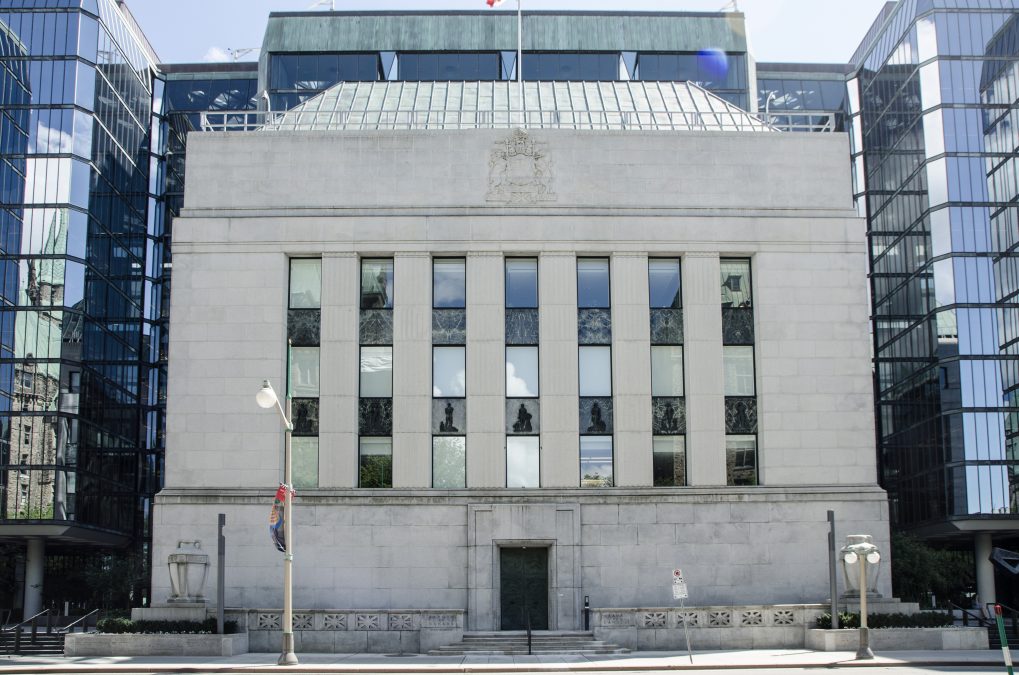
In its seventh scheduled announcement of 2026, the Bank of Canada increased the target for the overnight lending rate by 25 basis points to 2.50%, marking the first increase in more than three years.
The decision underscores the Bank of Canada’s growing concern that surging energy costs, driven by the conflict in the Middle East, could trigger more widespread inflation. The rate increase represents a pre-emptive effort to contain these pressures before they become entrenched in the broader economy. However, the Bank faces a difficult balancing act, as escalating trade tensions with the U.S., sluggish economic growth and a weakening labour market continue to cloud Canada’s financial outlook. The Bank will continue to assess inflation trends and broader economic conditions as it considers future interest rate decisions.
“The main argument for an increase was that energy prices are higher, they are expected to remain higher, and cost pressures are building,” said Tiff Macklem, Governor of the Bank of Canada, in a press conference following the announcement. “As we’ve been saying for some time, the longer energy prices remain high, the more likely it is these costs will spill over to consumer prices more broadly.
In September, the Consumer Price Index (CPI) rose 3.1% year over year, up from 3.0% in August. However, inflationary pressures have remained largely concentrated in the energy sector, with limited spillover into other goods and services. Gasoline prices surged 27.8% compared to a year earlier, while energy prices overall climbed 19.0%.
“With elevated inflation expected to last longer and the economy showing resilience, Governing Council agreed that risks to inflation had increased and there was less scope for monetary accommodation. Looking ahead, Governing Council agreed we would take future decisions one meeting at a time. There could be a need to raise the policy rate further, but given the uncertainties, we will proceed carefully.”
Rate hike to increase borrowing costs for variable-rate mortgage holders
The Bank of Canada’s decision to raise its overnight lending rate to 2.50% will increase borrowing costs for Canadians with variable-rate mortgages, as lenders adjust their prime rates accordingly. Homeowners with adjustable-rate mortgages will see their monthly payments rise, while those with fixed-payment variable-rate mortgages will have a greater share of each payment directed toward interest rather than principal.
The increase will also affect prospective homebuyers and those approaching mortgage renewal. Higher variable rates will add to borrowing costs and could reduce purchasing power for buyers entering the market. Meanwhile, homeowners renewing their mortgages will need to carefully assess their options, particularly as fixed mortgage rates, which are influenced by bond yields, have also edged higher in recent months.
According to the Royal LePage 2026 Mortgage Renewal Survey, conducted by Burson, 38% of Canadians with a mortgage on their primary residence expect their monthly mortgage payment to increase upon renewal, with 26% anticipating a slight increase and 12% expecting a significant jump. Homeowners who last renewed their mortgage when interest rates were at historic lows are the most likely to expect an increase in their monthly payment at their next renewal.
“The Bank of Canada faces a difficult balance: a fragile economy that needs support, and war- and tariff-driven cost pressures that are making inflation harder to contain. Today’s decision signals that price stability remains the Bank’s priority,” said Phil Soper, president and CEO, Royal LePage. “Canada’s housing sector is a powerful engine of economic activity, supporting employment and consumer spending across the economy. Its prolonged weakness is already weighing on economic growth, and higher borrowing costs will only deepen that challenge. While governments can help through housing and mortgage policy reforms, only monetary policy can deliver broad-based relief from borrowing costs. Unfortunately, persistent inflation has forced the Bank to move in the opposite direction.
“For prospective homebuyers and the broader economy, the critical question is whether this is a one-time adjustment or the beginning of a sustained tightening cycle. Much will depend on whether inflationary pressures remain concentrated in energy or spread more broadly across the economy.”
According to the survey, 70% of mortgage holders currently have a fixed-rate mortgage, while 29% have a variable-rate mortgage. At renewal, 43% plan to choose a fixed rate, 16% intend to select a variable rate, and 39% say they will review their options before making a decision. While nearly half of respondents (49%) expect to remain with their current lender, 44% plan to compare lenders before deciding.
The Bank of Canada will make its final interest rate announcement of the year on December 9th, 2026.
Read the full October 28th report here. Want to know more about how the overnight lending rate works? Read our explainer on how the Bank of Canada uses this financial tool.