Preparing your pool for closing season starts now
September 4, 2026
10 min. read
September is here, and with it comes that familiar end-of-summer feeling – cooler mornings, shorter evenings, and the quiet realization that pool season is winding down. Before you pull the cover out of storage, it’s worth taking the time to close your pool properly. A careful close now means fewer headaches next spring, lower risk of costly winter damage, and a much easier opening when warm weather returns. Here’s what to do before the temperature drops.
Why closing your pool properly matters
A pool that’s been hastily closed – or not closed at all – is an expensive problem waiting to happen. Algae can take hold quickly in untreated water, staining surfaces and clogging filtration systems. Freezing temperatures can crack pipes, damage pumps, and split fittings that are expensive to replace. And a pool cover that wasn’t properly secured can allow debris to accumulate all winter, making your spring opening a much bigger job than it needs to be.
Taking a few hours to close your pool correctly now protects your investment for the season ahead and sets you up for an easier start next year.
When should you close your pool?
Timing matters. Close your pool too early and you risk algae growth in untreated water that hasn’t yet cooled down. Close it too late and you risk freeze damage to equipment and plumbing.
As a general rule, wait until the water temperature consistently drops below 15°C before closing. For most Canadian homeowners, that window falls somewhere between late September and mid-October, depending on your region. September is the right time to start monitoring your water temperature, booking a pool professional if needed, and gathering your winterizing supplies, so that when the time comes, you’re ready to act quickly.
Balance the water chemistry first
Before you do anything else, test and balance your pool water. Water that goes into winter in poor chemical balance can stain pool surfaces, corrode equipment, and make it significantly harder to get the water clean again in the spring.
Aim for the following ranges before closing:
- pH: 7.2 to 7.6
- Alkalinity: 80 to 120 ppm
- Calcium hardness: 175 to 225 ppm
- Chlorine: 1 to 3 ppm
Once the water is balanced, add a winterizing chemical kit – typically a combination of algaecide, shock, and a stain or scale preventer – according to the manufacturer’s instructions. Allow the chemicals to circulate fully before proceeding with the rest of the closing process.
Clean the pool thoroughly
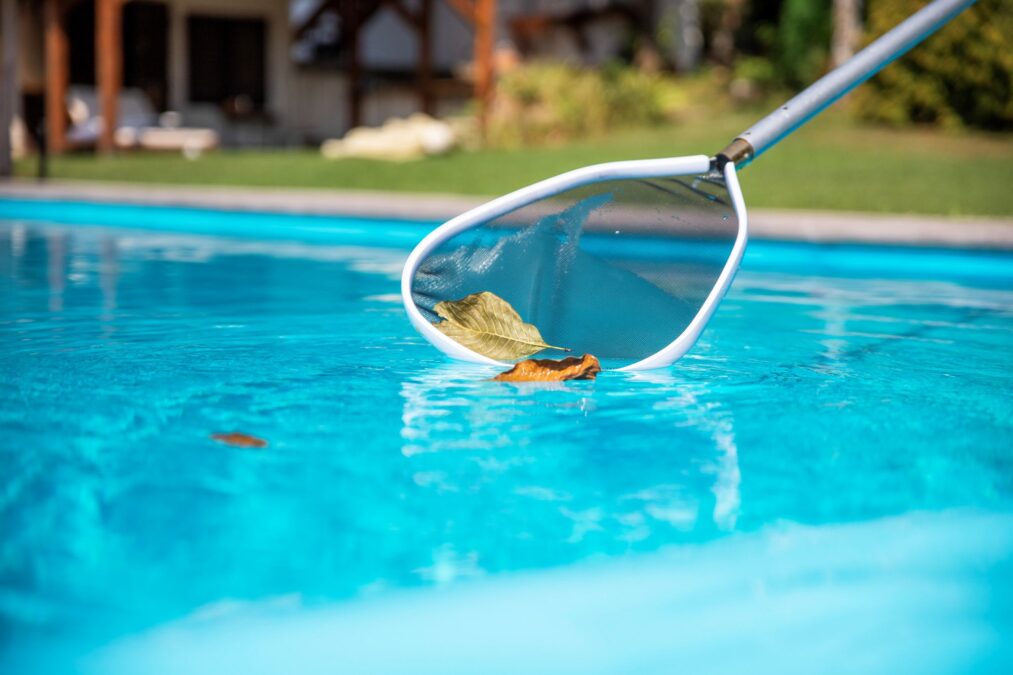
A clean pool is a healthier pool over the winter. Vacuum the floor, brush the walls and steps, and skim the surface to remove any debris. Pay particular attention to corners and areas around ladders and jets where algae tends to take hold first.
Empty your skimmer and pump baskets, and remove any accessories – ladders, handrails, toys, and floats – that should be cleaned and stored indoors for the season. Leaving metal or rubber accessories in or around the pool over winter can cause staining or deterioration.
Lower the water level
For pools with a mesh cover or no cover at all, lower the water level below the skimmer opening to prevent water from freezing inside the skimmer and cracking it. The exact level depends on your pool type and cover style. Check your manufacturer’s guidelines or ask your pool professional if you’re unsure.
If you have a solid pool cover that will collect rainwater and snowmelt, you may not need to lower the water level as much. Solid covers rely on water weight at the edges to hold them in place, so draining too much can leave the cover unsupported.
Blow out and plug the plumbing lines
This step is critical in Canadian climates. Any water left sitting in the plumbing lines can freeze, expand, and crack the pipes, a repair that can run into thousands of dollars.
Using an air compressor or shop vac, blow out the water from every line: return lines, skimmer lines, and any other plumbing connected to the system. Once cleared, plug each line with a winterizing plug to prevent water from re-entering. If you’re not comfortable doing this yourself, it’s worth hiring a pool professional; one cracked pipe will cost far more than the service call.
Protect the equipment
Your pump, filter, heater, and any other equipment need to be properly winterized before temperatures drop.
Drain all water from the pump, filter tank, and heater. Remove the drain plugs and store them somewhere safe; losing them in the spring is a common and frustrating experience. If you have a chlorinator or salt system, clean and drain it according to the manufacturer’s instructions.
For above-ground pool pumps and filters, bring the equipment indoors if possible. If they must stay outside, protect them with an insulating cover and ensure all water has been fully drained.
Secure the pool cover
A good pool cover is one of your best investments for winter protection. Before you put it on, inspect it for tears or weak spots that may have developed since last year — September is the right time to replace a cover that’s seen better days, before the season’s demand drives up wait times.
For above-ground pools, use water bags or cover clips to hold the cover in place. For in-ground pools, a cover pump is a worthwhile accessory — it automatically removes standing water and snowmelt from the cover surface, preventing it from sagging and potentially sinking into the pool.
Check the cover periodically throughout the winter, particularly after heavy snowfall or windstorms, and remove any excess accumulation before it becomes too heavy.
Book a professional now, before the rush
September marks the beginning of pool closing season across Canada, and professional pool services book up quickly. If you plan to hire a service for the blowout, cover installation, or full closing package, now is the time to call — waiting until the water turns cold means competing for appointments with every other pool owner in your neighbourhood.
What to expect at opening
A well-closed pool should open relatively easily in the spring. The water will likely need to be retested and rebalanced, and you’ll want to clean the cover before removing it so debris doesn’t fall in. But if the chemistry was right going in and the equipment was properly protected, you should be swimming again within a few days of opening rather than spending weeks dealing with green water and equipment issues.
Frequently Asked Questions
When should I close my pool in Canada? Wait until the water temperature consistently drops below 15°C – typically late September to mid-October, depending on your region. September is the time to start preparing and booking professionals, so you’re ready to close as soon as conditions are right.
Do I need to drain my pool for winter? No – fully draining a pool can damage the structure and is generally not recommended. You should lower the water level below the skimmer opening and blow out the plumbing lines, but leave the pool partially filled.
What chemicals do I need to close my pool? You’ll need to balance pH, alkalinity, calcium hardness, and chlorine levels before closing, then add a winterizing kit that typically includes algaecide, shock, and a stain or scale preventer.
Can I close my pool myself? Many homeowners close their own pools successfully, but the plumbing blowout in particular can be tricky. If you’re unsure, hiring a professional for at least the first closing is a worthwhile investment.
What happens if I don’t close my pool properly? Improper closing can lead to algae growth, stained surfaces, cracked pipes, and damaged equipment, all of which are expensive to fix. Taking the time to close correctly protects your pool and saves you money in the long run.