A deck should be a place to unwind, but it’s hard to fully relax when you feel like you’re on display. Whether you’re dealing with close neighbours, a busy street, or a sightline you’d rather not have, adding privacy to your deck doesn’t have to mean a major renovation.
There are plenty of stylish, practical solutions that can transform an exposed outdoor space into a genuinely private retreat, at a range of budgets and effort levels. Here’s where to start.
Assess your privacy needs first
Before you invest in any solution, spend a few minutes on your deck at different times of day and identify exactly where the gaps are. Is it a neighbour’s second-floor window that overlooks your seating area? A gap in the fence along one side? A clear sightline from the street?
Knowing precisely where you need coverage helps you choose the right solution and avoid over-building. In many cases, targeted privacy in one or two spots is all you need, and it costs far less than screening the entire perimeter.
Lattice panels and privacy screens
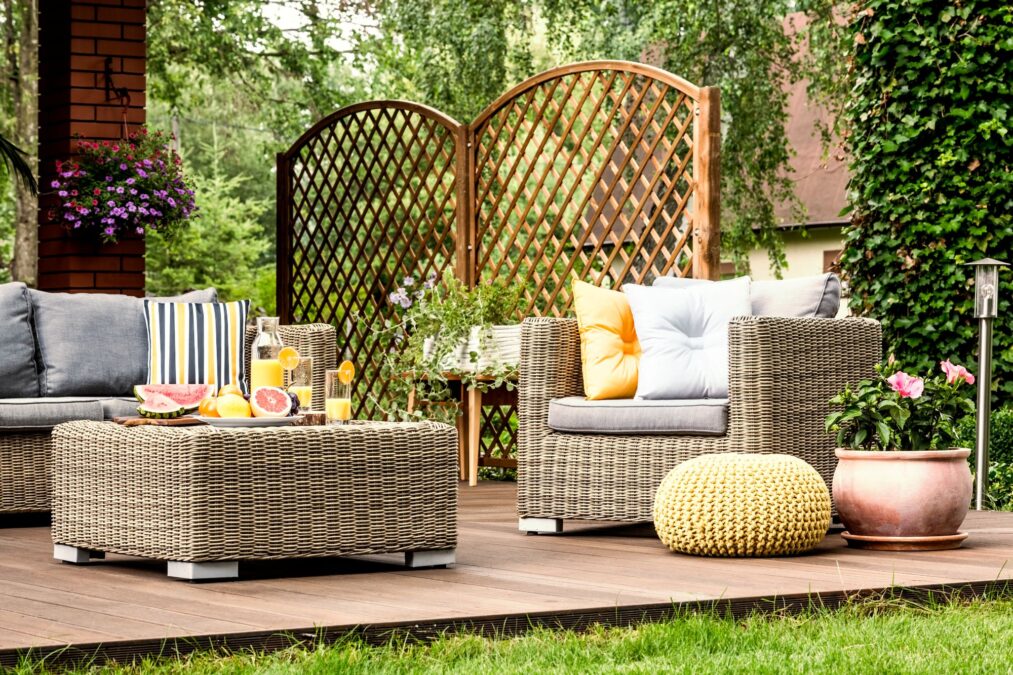
Lattice panels are one of the most versatile and budget-friendly privacy solutions for a deck. They can be mounted on an existing railing, attached to posts along the deck perimeter, or built into a freestanding frame that can be repositioned as needed. Wood lattice has a classic look that suits traditional homes, while metal or composite options offer a more contemporary aesthetic and require less maintenance.
Privacy screens – solid or slatted panels in wood, metal, or composite materials – provide more complete coverage than lattice and work well for blocking specific sightlines. Horizontal slatted screens have become particularly popular in recent years, offering a modern look while still allowing air circulation and filtered light through.
Both lattice and privacy screens can double as a support structure for climbing plants, which adds greenery and softens the overall look.
Pergolas and overhead structures
If your privacy concern is as much about overhead sightlines as it is about side views, a pergola or shade structure can help. A pergola with a louvred roof or retractable canopy gives you control over how much sky is visible from above, while also providing shade and defining the space as a distinct outdoor room.
Even an open pergola without additional coverings can create a sense of enclosure that makes a deck feel more private without fully blocking light or views. Adding curtain panels to the sides of a pergola is a simple and relatively inexpensive way to extend that coverage when you want it and pull it back when you don’t.
Outdoor curtains and fabric panels
Outdoor curtains are one of the quickest and most affordable ways to add privacy, and one of the easiest to change if you want to refresh the look. Weatherproof curtain panels hung from a tension wire, curtain rod, or pergola beam can be drawn across a section of the deck in seconds and tied back when not needed.
Look for fabrics specifically rated for outdoor use; they’ll hold up to sun, rain, and humidity far better than repurposed indoor curtains. Neutral colours tend to work best in most outdoor settings, though bold patterns can make a statement if it fits your deck aesthetic.
The main limitation of outdoor curtains is wind, in a particularly exposed location, fabric panels can billow and flap in a way that feels more chaotic than private. Grommets and tie-backs help, but in very windy spots, a more solid solution may be more practical.
Planters and green screens
Tall planters filled with columnar shrubs, ornamental grasses, or fast-growing annuals can create a natural privacy screen that’s both beautiful and flexible. Unlike a built structure, planters can be repositioned as your needs change – moved closer together for a party, spread apart for better airflow, or brought indoors over winter.
For a more permanent green screen, consider installing raised planter boxes along the deck perimeter and filling them with evergreen shrubs or climbing plants on a trellis. Cedars, boxwoods, and ornamental grasses are all good options for Canadian climates. Climbing plants like Virginia creeper, climbing hydrangea, or clematis can cover a trellis quickly and create a lush, layered look that gets better every year.
One thing to keep in mind: plants need maintenance. If you’re not keen on regular watering, pruning, and replanting, a lower-maintenance structural solution may suit you better.
Bamboo and reed fencing
Bamboo and reed roll fencing is an inexpensive and surprisingly effective privacy solution that can be attached to an existing fence, railing, or frame in an afternoon. It’s particularly well-suited to decks with a relaxed, natural aesthetic and works well as a temporary or seasonal solution.
The main drawback is longevity; natural bamboo and reed materials can deteriorate within a few seasons depending on weather exposure. Synthetic alternatives that mimic the look are more durable and worth considering if you want something that will last more than a year or two.
Built-in privacy walls and fencing
For a more permanent solution, a built-in privacy wall or fence section is the most durable and polished option. This can be as simple as extending an existing fence along one side of the deck, or as involved as building a full cedar privacy wall with integrated planters, lighting, or a trellis.
Built-in solutions require more planning and investment upfront, but they add value to the property and require minimal ongoing maintenance if built with quality materials. If you’re planning a deck renovation or building a new deck, it’s worth incorporating privacy into the design from the start rather than adding it as an afterthought.
Check with your municipality before building any permanent structure. Fences and privacy walls are subject to local height restrictions and setback requirements, and in some cases a permit may be required.
Lighting as a privacy tool
It might seem counterintuitive, but thoughtful lighting can actually enhance the feeling of privacy on a deck after dark. When the interior of your outdoor space is well lit and the surrounding area is darker, it becomes harder for people outside to see in, the opposite of what happens when you’re sitting in the dark under a bright exterior light.
Directing light downward toward the deck surface and seating area, rather than outward into the yard, keeps the focus on your space rather than drawing attention to it.
Combining solutions for the best result
The most effective approach to deck privacy is usually a combination of solutions. A pergola overhead, a slatted panel along the most exposed side, and a row of tall planters along the other can create a fully private outdoor room without enclosing the space so completely that it feels crowded.
Think about how you want to use the space and let that guide how much enclosure you actually need. A little privacy goes a long way when it’s placed in the right spots.
Frequently Asked Questions
What is the cheapest way to add privacy to a deck? Outdoor curtains, bamboo roll fencing, and tall planters are among the most affordable options. For a more permanent solution, lattice panels or horizontal slat screens offer good value relative to their impact.
Do I need a permit to add privacy screens to my deck in Canada? It depends on the structure and your municipality. Freestanding or removable screens typically don’t require a permit, but built-in walls or fences that exceed local height restrictions may. Always check with your local municipality before building anything permanent.
What plants work best for deck privacy in Canada? Columnar cedars, boxwoods, ornamental grasses, and climbing plants like Virginia creeper or clematis are all good choices for Canadian climates. Evergreen options provide year-round coverage; deciduous plants offer seasonal privacy during the warmer months when you’re most likely to use the deck.
How do I add privacy to a deck without blocking light? Horizontal slatted screens, lattice panels, and sheer outdoor curtains all provide privacy while still allowing light and air to pass through. Pergolas with open roofs are another option that adds structure without fully enclosing the space.
Can I add privacy to a second-storey deck? Yes, though the options are somewhat different. Pergolas with canopies, tall planters with columnar plants, and solid railing panels are all well-suited to elevated decks where sightlines tend to come from below rather than the side.