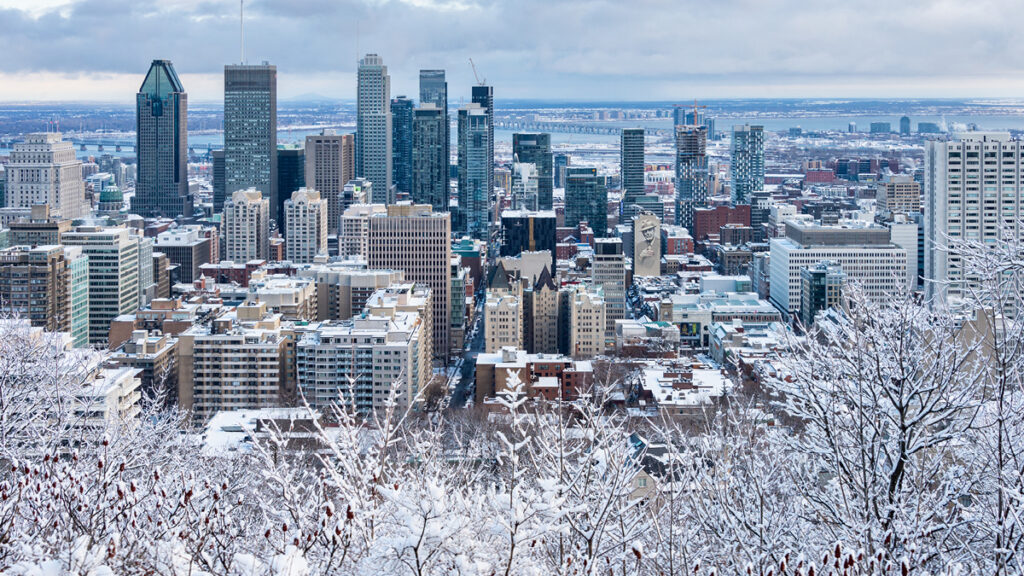
While major housing markets across Canada are expected to enter 2026 with a gradual return to seasonal trends, Quebec is telling a different story yet again. While some of the country’s largest cities brace for modest price declines, the province continues to record strong momentum, with home prices climbing thanks to strong buyer demand. This trend is especially clear in Greater Montreal, where home prices are expected to keep rising, contrary to the city’s counterparts, Toronto and Vancouver.
According to the Royal LePage Market Survey Forecast, the aggregate1 price of a home in the province of Quebec is set to rise 7.0% in the fourth quarter of 2026, compared to the same quarter in 2025, to reach $485,138.
“The Quebec real estate market proved resilient in 2025, positioning itself favourably compared to other major Canadian regions,” said Dominic St-Pierre, executive vice president of business development, Royal LePage. “Although economic uncertainty has dampened consumer confidence across Canada, Quebecers have proven more resilient and maintained their home buying activity, leading to a notable appreciation in property prices. We anticipate steady demand and stable inventory levels in 2026, with a notable increase in prices across the province.”
Royal LePage forecasts that the median price of a single-family detached home and condominium in the province will increase 8.0% and 3.0% to reach $536,220 and $403,657, respectively, in the fourth quarter of 2026 compared to the same period in 2025.2 Among Canada’s largest markets, the Greater Montreal Area is expected to see prices rise by 5.0% in 2026, contrasting with Greater Toronto and Greater Vancouver, where declines of 4.5% and 3.5%, respectively, are expected.
Quebec, a distinct market within Canada
“Montréal’s relative affordability compared with other major Canadian cities, combined with a balanced supply of condominiums, makes it a particularly attractive market. This momentum, despite a slight slowdown in the fall, is expected to sustain strong activity in 2026, especially in the surrounding areas where young families can still find affordable options,” said St-Pierre.
For the second consecutive year, the city of Quebec is positioned as the undisputed leader in property price growth in Canada. The aggregate price of a home is forecast to rise by 12.0% in the fourth quarter of 2026 compared with the same quarter in 2025, reflecting exceptional market momentum.
“Quebec City is undoubtedly the star of our market this year, and the forecast for 2026 confirms this trend,” said St-Pierre. “Local demand is very strong, supported by a robust job market and solid fundamentals. Despite the significant gains, the market remains relatively affordable, and continues to attract buyers, placing sustained pressure on prices. It is a remarkable performance, one we expect to see continue.”
Canada-US relations and their impact on the housing market
2025 was marked by economic uncertainty due to trade tensions with the United States. While these tensions may have affected consumer confidence nationally, their impact was less pronounced in Quebec, where the market did not show any significant slowdown.
“In Quebec, consumers seem to have been less directly affected by the uncertainty surrounding trade relations with our neighbours to the south, and the real estate market has not slowed down the way it has in other provinces,” noted St-Pierre. “However, the Canadian economy as a whole would benefit greatly from a stable trade agreement. Quebecers, like all Canadians, are waiting to see if such an agreement will be reached, which could lead to a general improvement in the economy and, in turn, renewed confidence in the market overall.”
Housing starts and political engagement
Despite efforts, obstacles to increase housing supply persist. While notable gains in housing starts have been observed in some regions, significant declines have been recorded elsewhere in the country. In Montreal, the new municipal administration will have to redouble its efforts to support new construction, as inventory remains low and demand strong.
“A general election is scheduled for 2026 in Quebec. Quebecers are eagerly awaiting strong and concrete commitments on housing policy,” said St-Pierre. “The housing crisis is a major concern, and it is crucial that the various levels of government work together to implement effective measures that will stimulate supply and ensure long-term affordability in the province.”
Highlights:
- In Gatineau, the aggregate price of a home is expected to increase 1.5% in the fourth quarter of 2026 compared to the same quarter of 2025 to $472,889.
- In Sherbrooke, the aggregate price of a home is expected to increase 8.0% in the fourth quarter of 2026 compared to the same quarter of 2025, reaching $435,564.
- In Trois-Rivières, the aggregate price of a home is expected to increase 10.0% in the fourth quarter of 2026 compared to the same quarter of 2025, reaching $430,760.
1Royal LePage’s aggregate prices are calculated using a weighted average of the median values of all housing types collected. Provincial price estimates have been updated to include all regions within the province and therefore may vary from previous reports.
2Price data, which includes both resale and new build, is provided by RPS Real Property Solutions, a leading Canadian valuation company. Price forecast reflects Q4 2026 over Q4 2025 projections.