
Amidst rising global tensions, BoC holds key lending rate in March 18th decision
Third consecutive hold keeps Bank of Canada’s overnight lending rate at 2.25%
March 18, 2026
5 min. read
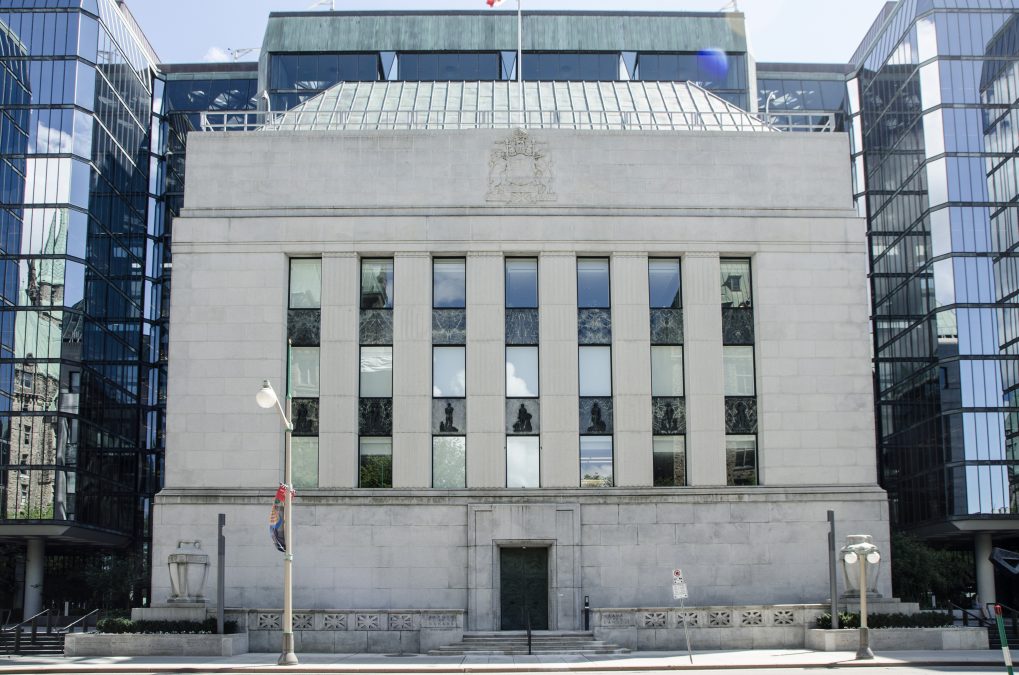
Today, in its second scheduled announcement of 2026, the Bank of Canada opted to hold the target for the overnight lending rate at 2.25%. This marks the third consecutive hold to interest rates since October of last year.
Escalating conflict in the Middle East has added volatility to energy prices in recent weeks, renewing concerns about inflation as gas prices climb and financial markets react negatively. While the Canadian economy is still expected to grow modestly as it adjusts to US tariffs, the Bank noted that recent data points to weaker-than-anticipated growth in the near term. However, it is still too early to assess the full impact of the conflict on Canada’s economic outlook, according to the central bank.
“The Canadian economy continues to face heightened uncertainty related to US trade policy and geopolitical risks. Now the war in Iran has added a new layer of uncertainty. Its impact on the global and Canadian economies will depend on how long the conflict lasts and the extent to which it spreads across the Middle East. Inflation in Canada has been close to the 2% target for more than a year. But, as we’ve seen, the war in Iran is causing oil prices to move sharply higher and this will push up inflation in the short term,” said Tiff Macklem, Governor of the Bank of Canada, in a press conference with reporters following the announcement.
“Governing Council will look through the war’s immediate impact on inflation but if energy prices stay high, we will not let their effects broaden and become persistent inflation.”
According to Statistics Canada, the country lost 84,000 jobs in February, pushing the unemployment rate to 6.7%. In the same month, Canada’s Consumer Price Index (CPI) rose 1.8% year over year, down from 2.3% in January. The main factor driving inflation lower last month was the end of the federal tax holiday in February last year. However, higher fuel prices could have the opposite effect in the coming months.
Early spring buyers benefit from steady lending rates
With the Bank opting to hold rates steady once again, homebuyers entering the market in the coming weeks can expect a period of relative stability in borrowing costs.
“Despite growing geopolitical uncertainty, interest rates remain steady following today’s Bank of Canada announcement. As global markets react to developments in the Middle East, policymakers will be watching closely for any impact on inflation and, ultimately, borrowing costs,” said Phil Soper, president and CEO, Royal LePage. “For Canadians preparing to purchase a home or renew their mortgage this spring, the key takeaway is stability. Today’s decision provides households with a measure of certainty as they plan major financial commitments in the weeks ahead.”
According to the Royal LePage® House Price Survey and Market Forecast, the aggregate1 price of a home in Canada decreased 1.5% year over year to $807,200 in the fourth quarter of 2025. On a quarter-over-quarter basis, the national aggregate home price posted a similar decline of 1.1%, reflecting softer market conditions and persistent buyer caution that weighed on activity during the traditionally active fall season.
The Bank of Canada will make its next interest rate announcement on April 29th, 2026.
Read the full March 18th report here. Want to know more about how the overnight lending rate works? Read our explainer on how the Bank of Canada uses this financial tool.
1Aggregate prices are calculated using a weighted average of the median values of all housing types collected. Data is provided by RPS Real Property Solutions and includes both resale and new build.